
Buying a home, especially your first one, is exciting, emotional, and sometimes overwhelming. One part of the process that consistently surprises buyers is closing costs. Many expect lawyer fees, but additional expenses like land transfer taxes, adjustments, lender fees, and title insurance often come as a shock.
The good news? Once you understand what to expect, none of this has to be confusing or stressful. Below is a clear, detailed breakdown of the most important closing costs for Ontario buyers, with a special focus on the Niagara Region.
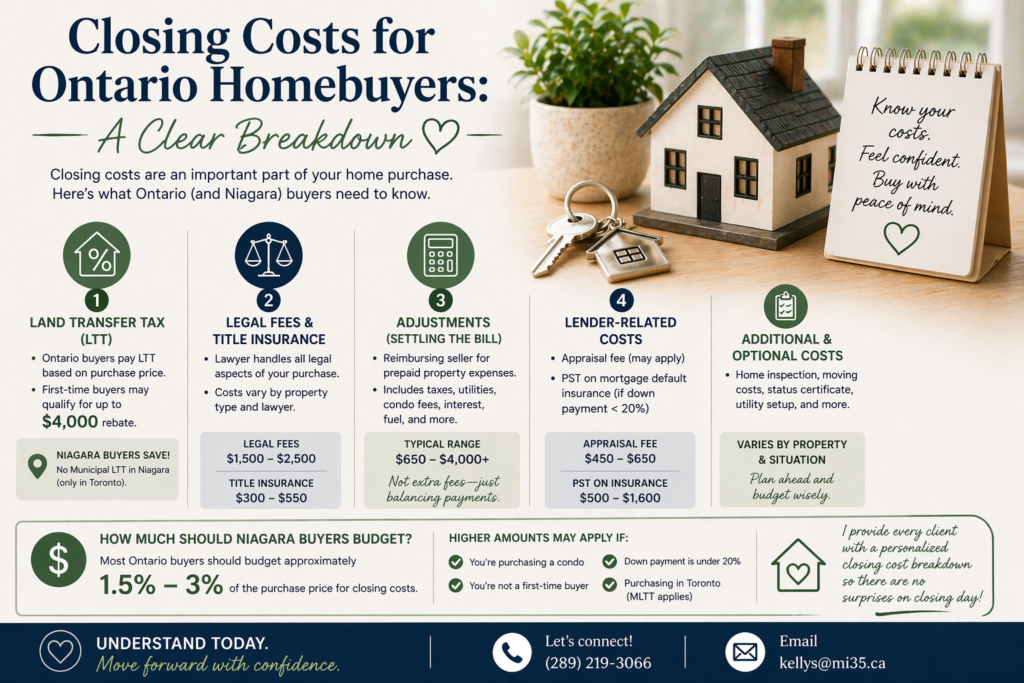
1. Land Transfer Tax (LTT)
In Ontario, every buyer pays Land Transfer Tax when purchasing a property. This is typically the largest closing cost, and the amount depends on your purchase price.
First-Time Buyer Rebate
If you’re a first-time homebuyer, you may qualify for up to:
- $4,000 in Ontario LTT rebates
This significantly reduces your total closing costs.
A Note for Toronto Buyers
Toronto also charges a municipal land transfer tax (MLTT) in addition to the provincial one. This does not apply to Niagara cities such as St. Catharines, Niagara Falls, Welland, Thorold, Pelham, Grimsby, and surrounding areas—saving local buyers thousands.
2. Legal Fees and Title Insurance
Your lawyer handles all legal aspects of your purchase, including:
- Reviewing and transferring the title
- Registering the deed and mortgage
- Reviewing condo status certificates (if applicable)
- Managing closing day funds and statements
Typical Costs for Ontario Buyers:
- Legal Fees: $1,500–$2,500
- Title Insurance: $300–$550
3. Adjustments (The Most Misunderstood Closing Cost)
Adjustments are often the part of closing costs that surprise most first-time buyers. These are simply “settling the bill” between the buyer and seller. The seller may have prepaid certain property expenses, and the buyer reimburses them for the portion that applies after taking possession.
Common Adjustments Include:
- Property tax adjustments: $300–$2,000
- Utility adjustments: $50–$300
- Condo fee adjustments: $200–$600
- Fuel adjustments for oil/propane tanks: $300–$800
- Interest adjustment: $50–$500
- Prepaid rent (for multi-unit properties)
These are not extra fees or penalties but simply balancing who paid what.
4. Lender-Related Costs
Depending on the type of mortgage you obtain, you may encounter lender-related costs such as:
Appraisal Fee
Some lenders require an appraisal to confirm the property’s value.
- Estimate: $450–$650
PST on Mortgage Default Insurance
If your down payment is under 20%, your mortgage includes default insurance (CMHC, Sagen, or Canada Guaranty). While the premium is added to your mortgage, the PST must be paid upfront at closing.
- Estimate: $500–$1,600
5. Additional and Optional Closing Costs
These costs aren’t required for every buyer but are worth planning for:
- Home Inspection: $350–$600
- Status Certificate (Condos): $100–$150
- Moving Costs: $500–$1,500
- Utility Connection Fees: $50–$200 per service
- Insurance Binder Fee: $25–$50
- Well/Septic Inspections (Rural Homes): $400–$800
- Water Tests (Wells): $50–$150
How Much Should Niagara Buyers Budget for Closing Costs?
Most Ontario buyers should budget approximately 1.5%–3% of the purchase price for closing costs.
A higher amount may apply if:
- You’re purchasing a condo
- You’re not a first-time buyer
- Your down payment is under 20%
- You are purchasing in Toronto (municipal LTT applies)
Most Niagara first-time buyers fall on the lower end of the range.
Why I Provide Every Client With a Closing Cost Breakdown
When I bought my first home, the adjustments completely caught me off guard. That’s why I provide every client with a personalized closing cost breakdown. It eliminates surprises and ensures you’re fully prepared for one of the biggest days of your life.
If you are trying to understand what you can realistically afford, my First-Time Homebuyers page can help you start with clearer mortgage guidance.