
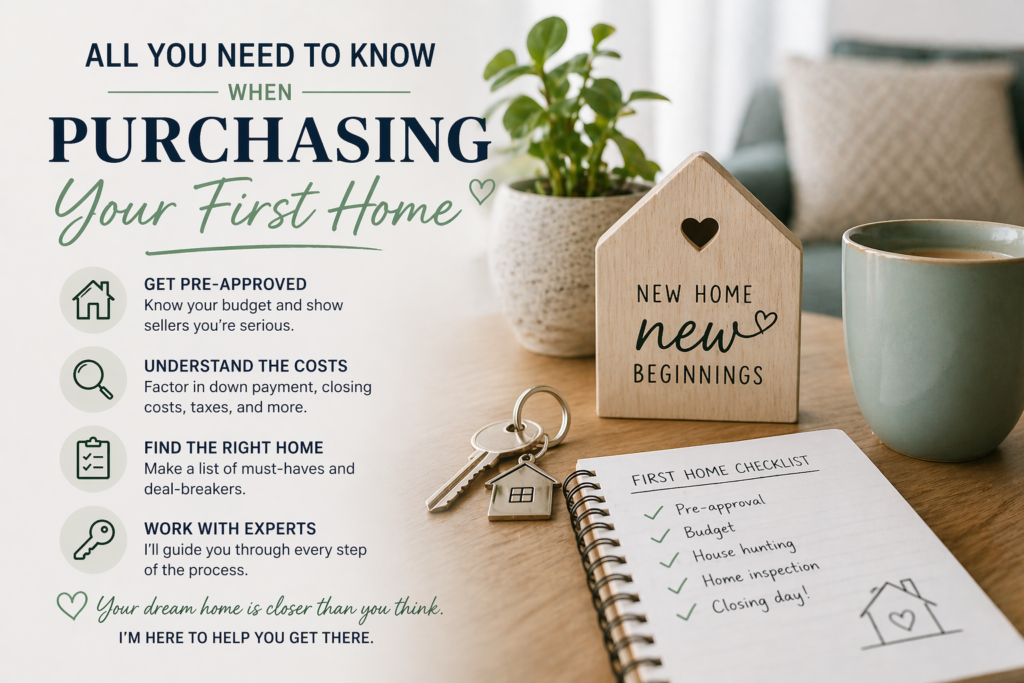
Buying your first home is a major milestone, but it can feel overwhelming if you’re not sure where to start. From understanding the buying process to getting your finances in order, there’s a lot to consider. I’ve worked with countless first-time home buyers and do my best to make the process as stress free as possible. I want to make it fun and memorable.
In this guide, I will walk you through the entire process, step-by-step, and explain why working with a mortgage broker and real estate agent is key to making your home-buying journey smoother.
Step 1: Assess Your Financial Situation
Before you start looking at homes, it’s important to get a clear picture of your finances. You’ll need to assess how much you can afford and understand your current debt, income, and savings. I work with my clients to determine a good budget, just because you can get approved for a $750,000 mortgage doesn’t mean you have to spend that much.
What to Do:
- Review your credit score: A good credit score helps you qualify for better mortgage rates. You can check this through your banking app to get an idea of where your score is.
- Calculate your budget: Figure out what you can afford for a down payment and monthly mortgage payments. Are you currently paying rent? How is your current cash flow? Do you have an emergency fund? There are a series of questions I will review with you to see what a comfortable monthly payment looks like for a mortgage.
- Set aside savings for closing costs: Over and above your down payment, you will need funds for closing day. These costs include legal fees, inspections, and taxes, and typically amount to 1.5% to 4% of the home’s purchase price.
Step 2: Get Pre-Approved for a Mortgage
A mortgage pre-approval is an essential step before house hunting. It shows sellers that you’re a serious buyer and gives you a clear idea of how much you can borrow. It also allows you to lock in an interest rate while you shop for your home. This is where a mortgage broker comes in handy. I will complete a full application with you to ensure you know exactly what you can afford.
Why Use a Mortgage Broker?
- Access to Multiple Lenders: A mortgage broker shops around to find the best mortgage rates and terms, giving you options beyond just your bank.
- Tailored Advice: They’ll assess your financial situation and recommend mortgage products that fit your needs, whether you’re a first-time buyer, self-employed, or have other unique circumstances.
- Negotiation: Brokers can often negotiate better terms than what a lender might offer you directly.
Step 3: Hire a Real Estate Agent
Once you have your pre-approval, it’s time to find a real estate agent. They’re experts at navigating the housing market, finding properties that match your needs, and negotiating on your behalf. I have some great realtors as partners and can refer a trusted partner to help find your next home.
Why Use a Real Estate Agent?
- Market Knowledge: They understand local real estate trends, neighborhood amenities, and price comparisons.
- Access to Listings: Agents have access to a broader range of properties, including those that may not yet be publicly listed. There is often more out there than what you see online.
- Negotiation Skills: When it comes to making an offer, an agent can help you negotiate the best price and terms, ensuring you get the most value for your money.
Step 4: Start House Hunting
With your mortgage pre-approval and agent in place, you can start looking at homes! This is one of the most exciting parts of the process. Have a wish list ready.
A few things to consider:
- Neighborhood: Look for an area that fits your lifestyle and long-term plans. Consider proximity to work, schools, and amenities like parks and grocery stores.
- Home Features: Decide on your must-haves, such as the number of bedrooms, bathrooms, and other features like a backyard or garage.
- Future Growth: Think about whether the home will meet your needs as your family grows or as your lifestyle changes.
Step 5: Make an Offer
Once you find the perfect home, it’s time to make an offer. Your real estate agent will help you determine a fair price based on market trends and the condition of the home.
What Happens Next:
- Negotiations: The seller might counter your offer. Your agent will handle these negotiations to get the best deal.
- Conditions: Your offer might include conditions, such as passing a home inspection or securing financing.
- Deposit: You’ll need to provide a deposit, which is usually around 5% of the purchase price, this will be part of your down payment. This shows the seller you’re serious about buying the home.
Step 6: Secure Your Mortgage
Once your offer is accepted, it’s time to finalize your mortgage. Your mortgage broker will help you complete this process by:
- Confirming your loan: Working with your lender to finalize the terms of your mortgage. Now that you have a purchase agreement we can put through the full application where they will review the property and other requirements.
- Locking in your rate: Ensuring you get the interest rate and terms discussed in your pre-approval.
Step 7: Conduct a Home Inspection and Appraisal
You will receive your firm approval and move on to the next step. Before everything is finalized, it’s important to complete a home inspection and a home appraisal.
Home Inspection
This is a detailed review of the property to ensure there are no major issues, like foundation problems, plumbing issues, or electrical concerns.
Home Appraisal
The lender requires an appraisal to confirm the property’s value. This ensures that they’re not lending more money than the house is worth. You will receive a call from the appraiser to arrange payment and the appraiser will then schedule the appraisal appointment with the sellers or listing agent.
Step 8: Close the Deal
Closing day is when all your hard work pays off, and the home officially becomes yours. During this step, you’ll finalize all the paperwork at the lawyers.
What to Expect:
- Review final documents: Your lawyer or notary will review all the closing documents with you, ensuring everything is in order. You will usually have a signing appointment before the closing day so there are no surprises on the actual closing day.
- Pay closing costs: On closing day you will be required to provide a bank draft to the lawyer for all closing costs. These include legal fees, land transfer taxes, and other administrative costs and would have been communicated to you at your signing appointment.
- Receive the keys: Once everything is signed and payment is made, the home is officially yours! You will receive the keys and start moving in!
Why Working with a Mortgage Broker and Real Estate Agent is Essential
Both a mortgage broker and a real estate agent play crucial roles in making the home-buying process smoother and more efficient.
- Mortgage Broker: They ensure you get the best mortgage rate, terms, and product for your unique situation. This can save you thousands of dollars over the life of your mortgage.
- Real Estate Agent: They guide you through the search, negotiation, and closing process, ensuring you find the best home for your needs at the right price.
Final Thoughts
Purchasing your first home is exciting, but it’s also a complex process. By following these steps and working with professionals like a mortgage broker and real estate agent, you can make the experience smoother and more rewarding. With the right guidance, you’ll find the perfect home, secure the best financing, and set yourself up for future financial success.
I am excited to be on this journey with you.
If you are getting ready to buy, my First-Time Homebuyers page can help you understand the mortgage process step by step.