This month’s mortgage brief looks at what buyers and homeowners across Niagara and Southern Ontario should be paying attention to right now. From modest movement in fixed rates and the July Bank of Canada announcement to practical strategies for paying down a mortgage, buying with confidence, and making better use of home equity, the focus is on clear decisions rather than perfect timing.
What Actually Matters This Month
Rate shoppers should be watching fixed mortgage rates closely.
We are beginning to see modest improvements in fixed-rate pricing from several lenders, including some of the major banks. This follows a decline in Canadian bond yields from their earlier highs. Fixed mortgage rates are influenced mainly by the bond market, not directly by the Bank of Canada.
That means fixed rates can change even when the Bank of Canada does nothing.
Oil prices remain one of the biggest factors to watch. Higher oil prices can increase inflation concerns, which can push bond yields and fixed mortgage rates higher. When oil prices ease, some of that pressure may come off. The direction will not always be immediate or predictable, but it can influence whether the recent fixed-rate improvements continue.
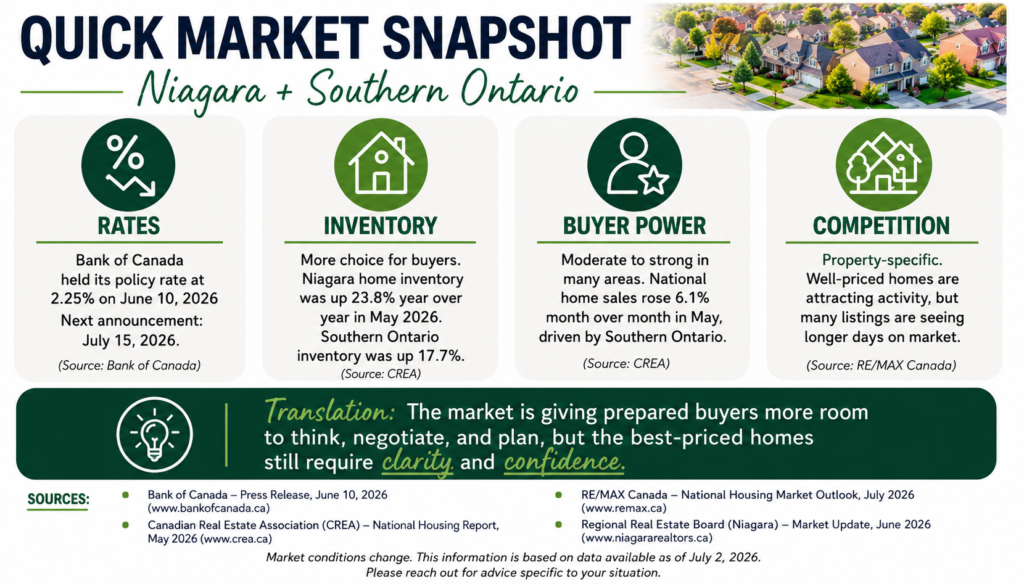
For variable-rate borrowers, the next Bank of Canada announcement is scheduled for July 15, 2026. The Bank held its overnight rate at 2.25% on June 10, and current conditions support another hold as it balances softer economic growth against inflation risk.
The takeaway: Fixed and variable rates are moving for different reasons. Instead of waiting for one major announcement, compare the options available for your specific mortgage, timeline, and comfort level.

Money Move of the Month
Make one extra mortgage payment this summer.
If your mortgage includes prepayment privileges, consider making one additional payment this year.
An extra payment normally goes directly toward your mortgage principal. This reduces the balance on which future interest is calculated and can help shorten your overall amortization.
The exact savings will depend on your mortgage balance, rate, remaining amortization, and lender rules. Still, consistently making even one extra payment each year can create meaningful long-term savings.
You could use:
money left over from a planned expense
a work bonus
part of a tax refund
extra seasonal income
Before making the payment, confirm how much your lender allows and whether there are restrictions on when or how the payment must be made.
Think of it as giving your future self a raise. Every dollar that reduces your mortgage balance today is one less dollar collecting interest for years to come.

Mistake to Avoid This Month
Waiting for the “perfect” interest rate.
One of the most common questions I receive is:
“Should I wait until rates come down?”
The honest answer is that nobody knows exactly when rates will change, how much they will change, or whether another part of the market will move at the same time.
A lower rate does not automatically create a better buying opportunity. If rates fall and more buyers return to the market, competition could increase. National housing activity already showed renewed momentum in May, with Ontario contributing significantly to the increase in sales.
The right time to buy is not when every market condition is perfect.
It is when:
your income is stable
your down payment and closing costs are ready
the monthly payment fits comfortably
the home supports your lifestyle and longer-term plans
Rates matter, but they are only one part of the decision.

If You’re Planning to Buy
Start building your home-buying team now
You do not need to wait until you find a property to speak with the professionals who will help you purchase it.
Start by connecting with:
- a mortgage professional
- a local Realtor
- a real estate lawyer
A mortgage review will help you understand your budget, payment options, down payment requirements, and any areas that need attention before you apply.
A Realtor can help you understand neighbourhoods, pricing, property types, and current negotiating conditions in Niagara communities.
A lawyer can explain the closing process and help you prepare for legal fees, title insurance, adjustments, and other closing-day requirements.
When the right property appears, you will already know your numbers and have the right people ready to help.
But more breathing room does not replace preparation.
A good plan allows you to shop with confidence, make stronger decisions, and avoid stretching into a payment that does not fit your life.
If You already own
Have you built more equity than you realize?
Your home’s value and mortgage balance have likely changed since you purchased or last refinanced.
That may mean you have more home equity than you realize.
Depending on your qualification, available equity may be used to:
- renovate or improve your home
- consolidate higher-interest debt
- help your children purchase their first home
- fund the purchase of an investment property
You do not necessarily need to sell your home to benefit from its value.
Accessing equity involves borrowing, so the goal should not simply be to take out the largest amount available.
The right question is whether using that equity improves your overall financial position.
Before moving forward, I look at the new payment, borrowing costs, available cash flow, future plans, and whether another option may be more suitable.

Real Scenario: A first home with the mortgage payment covered by rental income
One of my recent first-time buyers purchased a home with a legal basement apartment.
They will live upstairs and rent out the lower unit. Based on the expected rent, the basement income will be enough to offset the monthly mortgage payment.
That does not mean the home is free. The buyer will still need to budget for:
- possible periods without a tenant
- property taxes
- home insurance
- utilities
- maintenance and repairs
The rental income was reviewed properly during the mortgage qualification process. Not every lender calculates rental income in the same way, and the property must meet the lender’s requirements.
What made this purchase work was the strategy behind it. Instead of looking only for the lowest-priced home, the buyer chose a property that could support their monthly cash flow and longer-term goals.
Their first home is now both a place to live and a potential stepping stone toward building equity and future financial flexibility.

Thinking about buying, renewing, or refinancing?